Forklifts operate in busy environments where pedestrians, shelving systems, stock and vehicles all share the same space. Without proper safety procedures and trained operators, even a small mistake can lead to serious consequences.
Common causes of forklift accidents include:
- Operators carrying loads that exceed safe limits
- Driving with elevated loads that block visibility
- Turning too quickly, leading to rollovers
- Poor awareness of pedestrians in shared spaces
- Improper stacking of pallets
- Inadequate braking distance in confined areas
- Operating forklifts on uneven or sloped surfaces
Because forklifts are designed to lift heavy loads, even low-speed incidents can result in serious injury or extensive damage.
The Most Common Forklift Accidents in Warehouses
1. Forklift Tip-Overs
Tip-overs are one of the most dangerous forklift accidents. They usually occur when operators turn too sharply, travel too quickly, or carry loads that are unbalanced.
When a forklift tips, the operator may attempt to jump clear, often leading to severe injury. Proper training teaches operators how to maintain stability and avoid these dangerous situations.
2. Pedestrian Collisions
Warehouses are busy environments where workers often walk between aisles, loading zones and storage areas.
Without clear safety protocols and trained drivers, forklifts can easily collide with pedestrians who may not see or hear the approaching vehicle.
Operator awareness and proper warehouse traffic management are critical to preventing these accidents.
3. Falling Loads
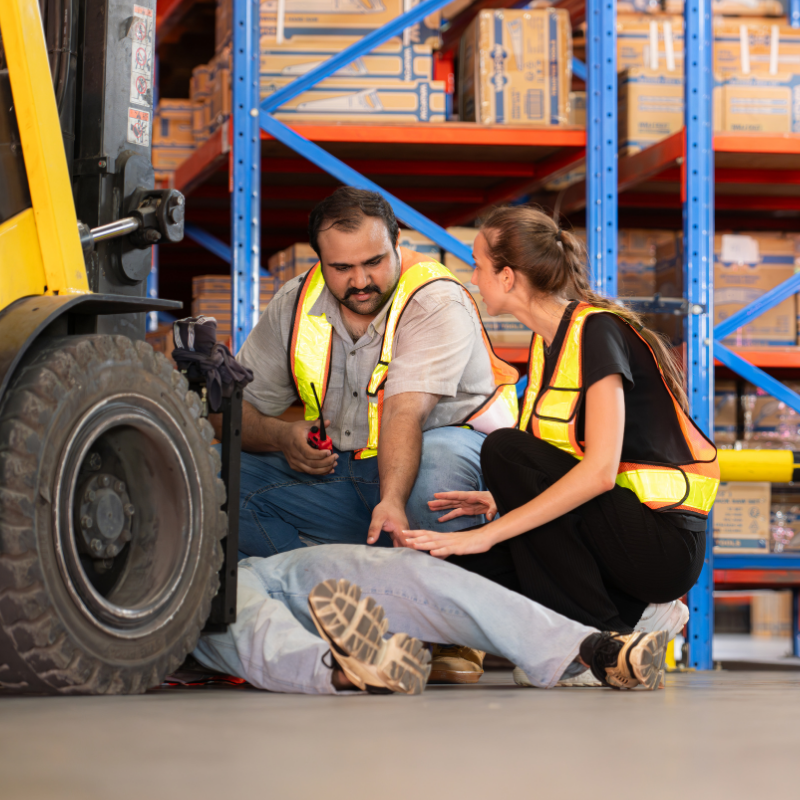
Incorrectly balanced loads or improper stacking can cause pallets or materials to fall from height.
Falling stock can damage valuable goods, equipment and racking systems — and it poses a serious risk to nearby workers.
Training ensures operators understand load balance, safe lifting techniques and proper stacking procedures.
4. Racking and Infrastructure Damage
One of the most frequent but overlooked forklift incidents is collision with racking systems, walls, loading bays or doors.
Even minor impacts can weaken structural supports, increasing the risk of shelf collapse or further damage later on.
These hidden repairs can quickly become expensive.
The Hidden Financial Impact of Forklift Accidents
Many companies underestimate the real cost of forklift incidents.
The expenses often extend far beyond the initial accident and may include:
- Damaged stock and pallets
- Repairs to warehouse infrastructure
- Equipment downtime
- Increased insurance premiums
- Medical expenses or injury claims
- Productivity losses while operations stop
- Possible regulatory penalties
For logistics and warehousing companies operating on tight margins, a single accident can significantly disrupt operations.
Preventing these incidents is far more cost-effective than dealing with the aftermath.
Training Is the Most Effective Prevention
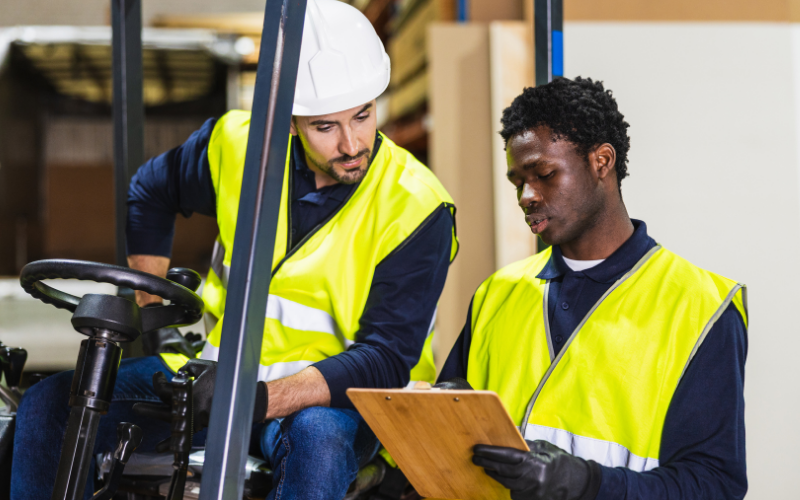
Forklift safety is not just about operating the controls. It involves understanding how the machine behaves under different conditions, how loads affect balance, and how to operate safely around people and obstacles.
Professional forklift training focuses on:
- Safe load handling and weight limits
- Stability and tip-over prevention
- Warehouse hazard awareness
- Safe reversing and turning techniques
- Pedestrian safety protocols
- Proper stacking and lifting procedures
- Equipment inspection before operation
When operators understand both the capabilities and limitations of forklifts, the risk of accidents drops dramatically.
The Role of Employers in Forklift Safety
Employers have a responsibility to ensure that operators are properly trained and competent before using forklifts in the workplace.
A structured training program helps businesses:
- Improve workplace safety
- Reduce costly accidents
- Meet occupational health and safety requirements
- Protect employees and company assets
- Maintain efficient warehouse operations
Investing in training is not just about compliance — it is about building a safer and more productive workplace.
Building a Culture of Safety
The most successful warehouses treat forklift safety as part of their overall safety culture.
This means:
- Ensuring operators receive proper training
- Reinforcing safe driving practices
- Encouraging awareness among all warehouse staff
- Regularly reviewing safety procedures
When safety becomes part of everyday operations, accidents become far less likely.
Final Thought
Forklift accidents rarely make headlines, but they quietly affect businesses across South Africa every day.
Behind each incident are avoidable costs, disrupted operations and unnecessary risks to employees.
With proper training and awareness, most forklift accidents are preventable.
For warehouses and logistics companies, investing in professional forklift driver training is one of the most effective ways to protect both people and productivity.
Advanced Driving for Africa provides professional forklift and advanced driver training designed to improve safety, competence and operational efficiency.
Well-trained operators don’t just move loads — they protect the workplace.
Book your advanced driving training today, phone 082 366 4064 or click the button below to send a message:
Protect your workforce. Protect your business.